The Role of Monasteries in Early Christian History
Monasteries served as crucial institutions during the early Christian period, functioning as spiritual centers and intellectual hubs. These communities preserved Christian teachings and maintained libraries of sacred texts during times of political instability and cultural upheaval. Monks dedicated their lives to religious practice, scholarly work, and community service. The monastic movement, which gained momentum in the fourth century, provided structured environments where learning could flourish. Monasteries attracted educated individuals who contributed their skills to copying manuscripts and preserving classical and religious knowledge. These institutions transcended mere spiritual purposes, becoming guardians of civilization itself. They offered refuge during barbarian invasions and societal collapse, protecting invaluable texts from destruction. The monastic commitment to education ensured that literacy and learning survived the turbulent Medieval period, bridging the ancient world with the Renaissance.
Scriptoriums: The Heart of Manuscript Production
Scriptoriums represented the epicenter of medieval manuscript production, where specialized monks devoted themselves entirely to copying texts. These dedicated workshops operated with meticulous precision, employing scribes skilled in various scripts and styles. Within scriptoriums, monks worked methodically, producing multiple copies of religious texts to distribute throughout Christian communities. The environment demanded absolute concentration, silence, and discipline to maintain accuracy. Scriptoriums developed standardized practices for manuscript creation, including consistent formatting and layout conventions. These facilities accumulated extensive libraries and reference materials, enabling cross-verification of texts. The infrastructure of scriptoriums included specialized workstations, adequate lighting, and careful environmental control to preserve delicate materials. Scribes maintained detailed records of completed manuscripts, creating catalogues that tracked production. The efficiency and organization within scriptoriums established models for book production that influenced publishing practices for centuries, fundamentally shaping how written knowledge disseminated throughout medieval Europe.
The Painstaking Art of Hand Copying Scriptures
Hand copying scriptures represented an arduous, meditative practice requiring extraordinary patience and precision. Monks invested months or years completing single manuscripts, carefully transcribing every word by candlelight. Each letter demanded individual attention, with scribes employing specialized techniques to ensure accuracy and clarity. The process involved preparing parchment, mixing inks, cutting quills, and executing calligraphy with steadfast concentration. Errors necessitated careful correction or manuscript rejection, wasting valuable materials and effort. Scribes endured physical strain from hunching over manuscripts, developing occupational ailments throughout their careers. Despite these challenges, monks approached this work as spiritual service, viewing manuscript production as sacred duty. Their commitment ensured textual fidelity across generations. The repetitive nature of copying facilitated memorization, deepening scribes’ understanding of biblical content. This intimate engagement with scripture transformed the physical act of copying into profound spiritual practice, merging manual labor with devotional experience in ways that modern reproduction technology cannot replicate.
Preserving Sacred Texts Through the Dark Ages
During the Dark Ages, monasteries functioned as repositories of sacred knowledge when external threats endangered civilization. Political fragmentation, barbarian invasions, and social chaos threatened cultural continuity, yet monasteries maintained vigilance over precious manuscripts. Monks actively transported manuscripts between communities, creating backup copies in geographically dispersed locations. This distribution strategy prevented total loss when individual monasteries faced destruction. Monks hid valuable texts in secure chambers, protecting them from plunder and fire. Their commitment transcended self-preservation, recognizing the paramount importance of preserving scriptural legacy for future generations. Monastic networks communicated across vast distances, coordinating preservation efforts and sharing copying responsibilities. Communities specialized in different scriptural texts, ensuring comprehensive preservation through distributed redundancy. Despite limited resources, hostile conditions, and personal hardship, monks safeguarded theological traditions and biblical teachings. Their heroic preservation efforts during civilization’s darkest hours ensured that Christian scripture survived when secular institutions collapsed, fundamentally altering history’s trajectory.
Monastic Communities as Guardians of Knowledge
Monastic communities transcended religious function, emerging as civilization’s primary guardians of accumulated knowledge. These institutions preserved not only sacred texts but also classical literature, scientific writings, and philosophical treatises. Monks recognized their responsibility toward intellectual continuity, collecting manuscripts from endangered sources. Monastic libraries grew into extraordinary repositories, cataloguing thousands of works according to sophisticated organizational systems. Communities established scriptoriums specifically to multiply copies of threatened texts, ensuring survival through redundancy. Monks engaged in scholarly work beyond mere copying, producing commentaries, analyses, and theological interpretations. They corresponded with distant monasteries, exchanging knowledge and discussing intellectual questions. Monastic education programs trained successive generations in Latin, Greek, and copying techniques. These communities maintained standards of textual accuracy and scholarly rigor that prevented knowledge distortion. Monasteries functioned as intellectual networks spanning Europe, creating continuity across dark periods. Their role as knowledge guardians established foundations for Renaissance learning and modern scholarship, demonstrating how institutional commitment preserves civilization’s intellectual inheritance.
Illuminated Manuscripts: Beauty and Devotion Combined
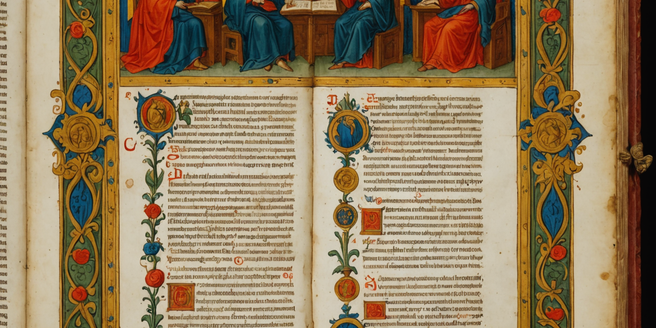
Illuminated manuscripts represented the intersection of artistic excellence and spiritual devotion, transforming scriptural texts into transcendent objects. Monastic artists embellished manuscripts with elaborate decorations, gold leaf, vibrant pigments, and intricate illustrations that captivated viewers. These artistic enhancements served devotional purposes, directing attention toward sacred content and inspiring contemplation. Illuminators developed sophisticated techniques for applying gold and pigments while maintaining textual legibility and durability. Each decorated manuscript required extensive labor, with specialized artists collaborating alongside scribes. The artistic vision transformed biblical narratives into visual experiences, making scripture accessible to non-literate populations. Illustrations depicted biblical scenes, saints, and theological concepts with remarkable creativity and technical skill. Illuminated manuscripts commanded enormous value, treated as treasures within monastic communities. The investment in artistic enhancement reflected monasteries’ recognition of beauty’s spiritual significance. These manuscripts survived precisely because communities recognized their exceptional worth, providing extraordinary examples of medieval creativity. Illuminated manuscripts demonstrate how monasteries synthesized practical preservation with aesthetic expression, creating enduring masterpieces.
How Monastic Rules Protected Scriptural Accuracy
Monastic rules established systematic protocols ensuring scriptural accuracy throughout manuscript production processes. Monastic leadership implemented rigorous verification procedures, requiring multiple monks to review completed manuscripts against source texts. The Rule of Saint Benedict specifically emphasized careful work and intellectual integrity, creating cultural expectations for precision. Communities developed standardized scripts and formatting conventions that facilitated error detection and correction. Senior monks trained younger scribes extensively before entrusting them with important scriptural texts. Monastic discipline included consequences for careless work, incentivizing meticulous attention throughout copying processes. Communities maintained reference libraries containing multiple authoritative versions, enabling comparison and verification. Monastic rules prohibited hasty work, requiring patience and deliberate concentration. Scribes inserted colophons, personal notes recording completion dates and acknowledging their work’s importance. These records created accountability mechanisms encouraging quality maintenance. Monastic governance structures held leaders responsible for manuscript quality within their jurisdictions. The systematic application of rules transformed scriptural preservation into institutionalized practice, preventing individual failure or negligence from compromising textual integrity across distributed communities.
The Spread of Latin Vulgate Through Monastic Networks
Monastic networks facilitated the systematic dissemination of Jerome’s Latin Vulgate throughout Christian Europe. Saint Jerome’s translation emerged as the authoritative scriptural version, and monasteries recognized its theological and practical significance. Monastic communities prioritized copying Vulgate texts, gradually establishing this translation as standard across Western Christianity. Monks traveling between monasteries carried Vulgate manuscripts, introducing them to distant communities and encouraging local reproduction. Monastic scriptoriums competed in excellence, copying Vulgate texts with particular care and attention. Networks of interconnected communities coordinated manuscript distribution, ensuring comprehensive geographical coverage. Monasteries in newly Christianized regions received Vulgate copies from established centers, facilitating religious standardization. The Latin Vulgate’s adoption through monastic networks created doctrinal unity across diverse Christian communities. This standardization prevented theological fragmentation and ensured consistent scriptural interpretation. Monastic leadership endorsed Vulgate authority, establishing it as authoritative within their jurisdictions. The coordinated effort across monastery networks transformed a single translation into universal standard, demonstrating how monastic institutions shaped religious development. This process established patterns for religious authority that influenced Christianity for centuries afterward.
Challenges Faced by Medieval Monks in Text Preservation
Medieval monks confronted formidable obstacles while preserving scriptural texts amid environmental, social, and physical hardships. Deteriorating materials proved constant adversary, with parchment degrading despite careful storage and handling. Environmental conditions including moisture, temperature fluctuations, and pest infestations threatened manuscript integrity continuously. Fires represented catastrophic dangers, destroying centuries of accumulated work and irreplaceable texts. Political instability and warfare repeatedly targeted monastic communities, resulting in manuscript destruction and community dispersal. Limited resources constrained scriptorial production capacity, requiring prioritization among countless texts needing preservation. Monks experienced physical suffering, enduring eyestrain, back pain, and occupational diseases from manuscript work. Intellectual challenges emerged when source texts contained errors or contradictions, demanding careful judgment. Linguistic evolution complicated preservation efforts, as Latin evolved and scribes encountered texts in increasingly archaic forms. Economic pressures sometimes forced monasteries to suspend copying operations during crises. Despite overwhelming challenges, monks persisted in their preservation mission, demonstrating extraordinary resilience and commitment to ensuring scriptural survival.
The Legacy of Medieval Monasticism on Modern Scripture
Medieval monastic preservation efforts profoundly influenced modern biblical scholarship and scriptural availability. The manuscripts monks painstakingly copied provide primary sources for establishing authoritative biblical texts. Modern translations derive substantially from monastic manuscripts, with scholars comparing surviving copies to determine original wording and meaning. The standardized Vulgate that monasteries disseminated established textual foundations persisting through contemporary Christianity. Monastic cataloguing and organizational systems pioneered modern library science and archival methodology. Their commitment to accuracy influenced contemporary standards for textual criticism and manuscript authentication. The survival of classical literature depended equally on monastic preservation, enriching modern intellectual heritage. Illuminated manuscripts inspire contemporary artists while providing historical documentation of medieval religious understanding. Monastic scriptoriums established models for institutional knowledge preservation that inform modern publishing and digital archiving. The discipline and dedication monks demonstrated continue inspiring scholars and preservationists. Contemporary biblical scholarship recognizes monastic communities’ irreplaceable contributions to scripture’s survival and dissemination. Modern religious education utilizes texts preserved through monastic networks, demonstrating tangible continuity. Medieval monasticism established preservation principles remaining relevant for contemporary information management and cultural conservation challenges.