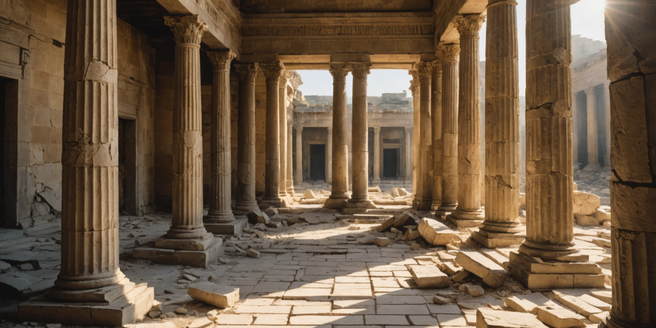
Historical Context and Biblical Origins
The concept of abomination desolation originates from the Hebrew Bible, particularly in the Book of Daniel. Written during the Hellenistic period, Daniel addressed the persecution of Jewish people under Antiochus IV Epiphanes in the second century BCE. The term references the desecration of the Jerusalem Temple when pagan altars replaced Jewish worship. This historical event shaped Jewish and Christian eschatological thought profoundly. The phrase ‘abomination of desolation’ became a powerful metaphor for spiritual corruption and divine judgment. Early Christian communities reinterpreted this ancient prophecy through their own theological lens, connecting it to Jesus’s teachings about end times. Understanding the original historical context helps clarify how later religious traditions adapted and reapplied these concepts to their contemporary circumstances.
Understanding the Prophecy in Daniel
Daniel’s prophecies, particularly in chapters 9, 11, and 12, contain cryptic references to future desolation. The prophet describes a vision where an abominable thing stands in a holy place, causing devastation. Daniel’s timeline prophecies mention seventy weeks, creating complex calculations among interpreters. The text employs symbolic language characteristic of apocalyptic literature, making straightforward interpretation challenging. Many scholars identify the primary reference as Antiochus IV’s temple desecration in 167 BCE. However, Daniel’s layered symbolism allows for multiple fulfillments across history. Jesus himself referenced Daniel’s prophecy in Matthew 24, suggesting future significance beyond the historical Seleucid period. This multivalent nature of Daniel’s prophecies continues generating theological discussion and varied interpretative frameworks among modern biblical scholars.
Interpretations Across Christian Traditions
Christian denominations interpret abomination desolation through diverse theological frameworks. Catholic and Orthodox traditions often emphasize historical fulfillment under Antiochus IV, viewing it as completed prophecy. Protestant evangelical churches frequently connect it to end-times scenarios involving the Antichrist and tribulation period. Some dispensationalist theologians predict a future temple desecration during the tribulation. Liberal biblical scholars emphasize the historical-critical approach, focusing on ancient Seleucid persecution. Amillennial traditions interpret prophecies symbolically rather than literally. Preterist interpreters connect everything to first-century Roman destruction of Jerusalem. These varying perspectives reflect different hermeneutical approaches and eschatological assumptions. Each tradition offers thoughtful theological reasoning, though they reach substantially different conclusions about timing, agents, and spiritual significance of abomination desolation events.
The Role of the Temple in End Times Theology
The Temple occupies central importance in abomination desolation theology across traditions. For ancient Jews, the Temple represented God’s earthly presence and covenant relationship. Its desecration symbolized spiritual catastrophe and divine abandonment. Christian interpreters debate whether prophecies require a rebuilt physical temple or apply symbolically to the church as God’s temple. Some evangelical theologians predict temple reconstruction before tribulation events. Jewish eschatology emphasizes temple rebuilding as fundamental to messianic age arrival. Islamic tradition considers the Temple Mount significant in end-times scenarios. Archaeological and political complexities surrounding modern temple reconstruction add contemporary dimensions to ancient prophecies. Whether interpreted literally or symbolically, the Temple remains theologically significant in understanding abomination desolation. Its spiritual and physical significance bridges ancient Jewish history with contemporary religious expectations.
Modern Applications and Theological Debates
Contemporary theology debates abomination desolation’s relevance to current events and future expectations. Some Christians interpret geopolitical developments through apocalyptic lenses, identifying potential fulfillments. Debates continue regarding whether prophecies remain unfulfilled or already experienced completion. Modern scholars emphasize historical context while acknowledging spiritual dimensions. Interfaith discussions explore how Jewish, Christian, and Islamic traditions view temple-related prophecies differently. Contemporary political tensions surrounding Jerusalem and the Temple Mount add urgency to these theological discussions. Academic biblical scholars challenge literalist interpretations, emphasizing literary analysis and historical methodology. Despite scholarly advances, lay believers maintain diverse eschatological expectations based on their traditions. These ongoing debates reflect tension between ancient religious texts and modern historical consciousness, requiring careful theological discernment.