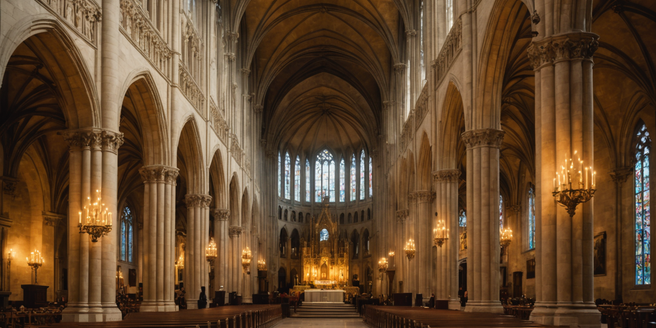
Historical Context of Church-Run Schools
The historical context of church-run schools dates back to the Middle Ages when education was primarily managed by religious institutions. Monasteries were among the first to provide a structured curriculum, mainly focusing on religious texts. Over time, as societies evolved, so did the purpose of these schools. They began to include classical education subjects such as philosophy, rhetoric, and the sciences. This foundation fostered critical thinking and civic responsibility, integrating values deemed necessary for society. The church’s control persisted for centuries until secular movements began to question this dominance, instigating reforms for a more inclusive approach. However, these historical establishments sowed the seeds for contemporary schooling, influencing how modern educational systems are structured, although religious biases have long been a subject of scrutiny.
Role of Religion in Curriculum Development
Religion has played an influential role in shaping educational curricula, especially in church-affiliated schools. The integration of religious studies into mainstream subjects has been a hallmark of these institutions. Biblical texts are often interpreted alongside historical or literary content, providing a dual perspective that aims to align moral teachings with academic pursuits. Critics argue that this fusion can sometimes overshadow secular teaching, potentially compromising educational objectivity. In contrast, proponents assert that it enriches students’ understanding by offering a holistic education that intertwines ethical and spiritual development with intellectual growth. This ongoing debate prompts questions about the future direction of curriculum development, where the challenge lies in balancing religious teachings with the educational standards of a pluralistic society, ensuring all students benefit equally.
Comparison of Secular and Church-Affiliated Institutions
When comparing secular institutions to church-affiliated ones, several distinctions arise concerning ethos, curriculum, and student engagement. Church-affiliated schools typically emphasize religious education alongside academic subjects, fostering an environment where spiritual growth is as valued as intellectual achievement. In contrast, secular schools often adopt a more diverse approach, encouraging the exploration of various worldviews without a specific religious lens. This divergence influences teaching methodologies, where secular schools might prioritize critical thinking and inquiry, whereas church-affiliated institutions may focus on character building and moral guidance. Both systems aim to prepare students for societal participation; however, their methods reflect different foundational philosophies. Understanding these variations is crucial for parents and educators when choosing educational paths that align with their values and expectations for student development.
Impact of Church Values on Student Morality
Church values significantly impact student morality, as many religious schools strive to create nurturing environments that emphasize ethical behavior and moral integrity. By incorporating teachings that highlight virtues such as honesty, kindness, and responsibility, these schools aim to develop well-rounded individuals prepared to contribute positively to society. However, such an emphasis can generate discussions on the boundaries between moral education and religious indoctrination. Proponents argue that these values provide a crucial moral compass, while critics caution against potentially infringing upon personal beliefs. Balancing religious precepts with the cultivation of independent ethical reasoning remains a delicate task. Despite such concerns, church-affiliated institutions continue to play a pivotal role in moral education, often incorporating service projects and community involvement as practical applications of taught values.
Church Influence on Higher Education Policies
Church influence on higher education policies can be traced through initiatives that underscore ethical considerations and communal responsibility in academic pursuits. Many religious colleges and universities infuse these values into their administrative frameworks, guiding policies on student conduct, faculty governance, and institutional mission statements. Though typically grounded in religious doctrine, such policies aim to foster inclusive and respectful academic environments. However, this influence also brings to light concerns regarding academic freedom, as some fear that religious perspectives may restrict open discourse and intellectual exploration. While religiously affiliated institutions often defend this approach, aiming to nurture both spiritual and academic growth, the balance between faith-based guidance and scholarly openness remains a nuanced and ever-evolving conversation in the realm of higher education.
Interfaith Approaches to Modern Education
Interfaith approaches to modern education seek to harmonize diverse religious teachings within educational frameworks, particularly in settings that embrace multiple faith traditions. These approaches advocate for curriculum designs that foster understanding, respect, and collaboration among various religious and cultural groups. Programs often include comparative religion courses, interfaith dialogue initiatives, and multicultural events, encouraging students to engage with diverse perspectives. Implementing such strategies requires sensitivity and inclusivity, ensuring no single narrative dominates at the expense of another. By promoting dialogue and reflection, interfaith education aims to equip students with the skills necessary to navigate a globalized world characterized by religious diversity. As society continues to evolve, these programs highlight the growing need for educational systems that reflect the pluralistic nature of contemporary demographic landscapes.
Debates Surrounding Church and State Separation
The debates surrounding church and state separation in education remain a contentious issue, as stakeholders continue to grapple with finding the proper balance between religious freedom and secular governance. Proponents of strict separation argue that public education should remain free from religious influence to ensure equality and neutrality, advocating for policies that prevent government endorsement of any particular faith. Conversely, supporters of religious perspectives in schooling maintain that without acknowledging religious contributions, curricula risk ignoring significant cultural and historical contexts. This contention raises fundamental questions about the role of religion in public spaces and how educational policies can accommodate diverse beliefs while maintaining inclusivity. As societies strive to uphold both human rights and cultural heritage, these debates underscore the complexity in navigating church-state dynamics within educational structures.
Case Studies: Church-Led Educational Reforms
Case studies on church-led educational reforms offer insightful examinations of the ways in which religious institutions have shaped educational practices and policies. Such reforms often emphasize moral and ethical development, incorporating values-based education into various subjects. Notable examples include initiatives where church organizations have partnered with public schools, influencing curricula and introducing programs focused on social justice, community service, and character education. These cases provide valuable lessons on the integration of faith-based principles within secular education systems, highlighting successes and challenges faced during implementation. Critics, however, warn of potential biases and ideological dominance. The exploration of diverse case studies thus allows for a broader understanding of how church-led efforts can contribute to educational innovation, adapting to changing societal needs while maintaining core religious tenets.
Future Trends in Church-Inspired Education
Future trends in church-inspired education are likely to reflect broader societal shifts towards inclusivity, technological integration, and global interconnectedness. Educational institutions affiliated with religious organizations are beginning to embrace these dynamics, recognizing the need to update traditional models by incorporating digital tools, innovative teaching methods, and cross-cultural understanding. With increasing dialogue on social justice and environmental stewardship, future church-inspired curricula may place greater emphasis on these areas, aligning religious teachings with contemporary ethical considerations. Furthermore, interfaith collaborations and interdisciplinary studies could become more prevalent, promoting a comprehensive educational experience. As these trends unfold, church-influenced education remains poised to adapt, striving to balance theological principles with progressive educational strategies to meet the evolving needs of diverse student populations.
Global Perspectives on Religious Education
Global perspectives on religious education showcase the varying ways in which different cultures incorporate faith into schooling. Countries with dominant religious traditions may heavily integrate these into their national curricula, while others maintain a clear demarcation between religion and education. This diversity reflects historical, cultural, and legal nuances that shape educational practices worldwide. In some regions, religious education is seen as a means of preserving cultural heritage and identity, whereas in others, it incites debate over inclusivity and the risk of marginalizing minority beliefs. By examining these global perspectives, educators can reflect on their practices, acknowledging both the benefits and challenges of religious education in fostering a well-rounded, inclusive environment. These insights encourage cross-cultural exchanges that enrich understanding and cooperation in an increasingly interconnected world.