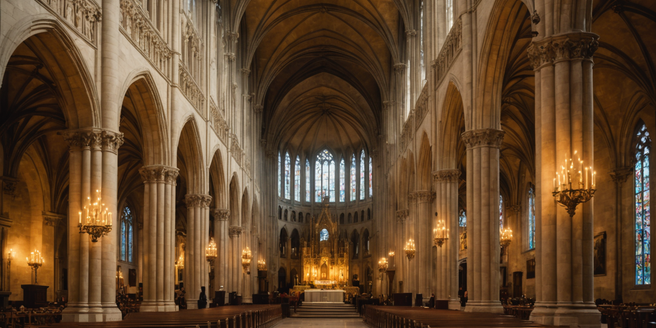
The Rise of Humanism in Religion
During the Renaissance, the philosophical movement of humanism began to drastically influence religious beliefs. Humanism emphasized the importance of human potential and achievements, encouraging a focus on individual experience and reasoning. This shift was evident in the way people began to read and interpret religious texts, seeking a more personal connection with faith rather than blind adherence to dogma. Humanism led to a decline in the medieval view of the church as the sole mediator between man and God. As a result, individuals began to question the authority of the church, setting the stage for religious reformations. The emphasis on human dignity and reason fostered a more exploratory spirit in religious matters, encouraging debates and discussions that laid the groundwork for the numerous ideological shifts of the era.
The Reformation: A Break from Tradition
The Reformation represented an era of major religious upheaval and a move away from the traditional practices of the Catholic Church. Figures like Martin Luther and John Calvin challenged the Church’s practices, such as the sale of indulgences and the lack of biblical literacy among the general population. Luther’s 95 Theses sparked widespread debate, leading to reforms that reshaped the religious landscape of Europe. The Reformation emphasized direct access to the scriptures, encouraging translations of the Bible into vernacular languages. As the movement gained momentum, new Protestant denominations emerged, each advocating a return to what they saw as true Christian teachings. This break from tradition not only redefined religious practices but also led to social and political changes across Europe as people questioned longstanding church authority.
The Spread of Protestantism Across Europe
The spread of Protestantism across Europe marked a pivotal shift in religious dynamics during the Renaissance. It began with Martin Luther in Germany, whose ideas quickly disseminated through his prolific writings and the newly invented printing press. This enabled rapid communication of reformist ideas and bolstered a network of supporters across distant regions. Protestantism appealed to a variety of social classes, offering a clear departure from Catholic doctrines that many found burdensome or corrupt. It gained considerable traction in countries like Switzerland, the Netherlands, and Scandinavia, spawning denominations like Lutheranism and Calvinism. This religious proliferation was not merely confined to theological debates; it also incited considerable political turmoil, contributing to wars and alliances formed on the basis of these new religious identities that would reshape Europe for centuries.
The Catholic Counter-Reformation Efforts
In response to the spread of Protestantism, the Catholic Church initiated the Counter-Reformation to address internal abuses and affirm Catholic doctrines. This revitalization effort was spearheaded by the Council of Trent, which convened from 1545 to 1563. The council aimed to clarify Catholic theology, reform clerical practices, and reaffirm the importance of church traditions that Protestants had challenged. New religious orders, such as the Jesuits, emerged, focusing on education and missionary work to counter Protestant growth. The Counter-Reformation also focused on art and architecture, using these mediums to inspire and educate the faithful, as seen in the Baroque style’s emotional appeal. These efforts curbed Protestant advances in some regions and reinvigorated Catholic spirituality, leading to a more unified and disciplined church ready to confront the challenges posed by the Reformation.
Impact of Religious Change on Art and Culture
The religious changes of the Renaissance dramatically influenced the development of art and culture. Protestant reformers focused on simplicity and austerity, leading to a reduction in religious art and iconography in Protestant regions. In contrast, the Catholic Counter-Reformation employed art as a tool to convey religious themes and inspire devotion, resulting in the flourishing of the Baroque style. Artists like Caravaggio and Bernini created works full of emotion and drama, designed to evoke spiritual introspection. The period also saw a shift in subject matter, with more emphasis on human experience and individuality, reflecting the growing influence of humanism. Religious themes were presented with a new perspective, integrating the divine with everyday life, which contributed to a burgeoning sense of cultural richness and diversity during this transformative era.
Key Figures in Renaissance Religious Transformation
The religious transformation of the Renaissance was driven by key figures whose efforts shaped the course of history. Martin Luther, a German monk, was a seminal figure, initiating the Protestant Reformation with his 95 Theses. His insistence on scripture as the sole authority challenged the Catholic Church’s practices and led to new Protestant denominations. John Calvin, a theologian and reformer in Switzerland, further developed Protestant theology, emphasizing predestination and the sovereignty of God. Ignatius of Loyola, founder of the Jesuit order, played a vital role in the Catholic Counter-Reformation, focusing on education and missionary work. These figures, among others, not only spurred doctrinal changes but also influenced political and social structures. Their contributions and ideologies laid the groundwork for modern Christianity and sparked widespread reflections on faith and governance.
The Role of the Printing Press in Religious Spread
The invention of the printing press by Johannes Gutenberg around 1440 revolutionized the spread of religious ideas during the Renaissance. It allowed for the mass production of texts, making books more accessible and affordable. This technological advancement played a crucial role in the dissemination of Protestant Reformation ideas by enabling the rapid spread of Martin Luther’s writings and the translations of the Bible into vernacular languages. Previously, religious texts had been copied by hand, limiting their accessibility to the educated elite. With the printing press, literature promoting reform could reach a broader audience, empowering more people to engage with religious texts directly. This not only facilitated the rise of Protestantism but also encouraged greater literacy and intellectual exchange across Europe, forever altering the landscape of religious communication.
Religion and Politics: The Power Struggle
The Renaissance period saw significant entanglement between religion and politics, leading to power struggles that shaped nations. The rise of Protestantism challenged the Catholic Church’s dominance and disrupted political alliances based on religious affiliations. Monarchs and rulers found themselves caught between aligning with the Catholic Church or supporting emerging Protestant groups. The formation of Protestant states like England under King Henry VIII, who broke from the Catholic Church, illustrated the political maneuvers driven by religious disagreements. Religious conflicts, such as the Thirty Years’ War, were as much about political control and territorial ambitions as they were about theological disputes. The period marked a shift towards recognizing the state’s authority over religious matters, leading to the gradual separation of church and state and the development of modern nation-states.
The Shift in Religious Practices and Beliefs
During the Renaissance, religious practices and beliefs underwent substantial transformation as a result of reformations and new ideological movements. The Protestant Reformation spurred a reevaluation of rituals, with emphasis on direct engagement with scripture and personal faith over church-imposed mediations. For many, sacraments were simplified or reinterpreted, reflecting a desire to return to what reformers saw as the faith’s original purity. Catholicism responded with the Counter-Reformation, emphasizing tradition and sacramental devotion. These shifts also influenced how people viewed salvation, grace, and the role of clergy. Additionally, the spirit of inquiry fueled by humanism encouraged individuals to seek personal spiritual experiences and explore religious ideas independently. As a result, a more diverse landscape of religious thought and practice emerged, reflecting broader cultural changes and impacting believers’ daily lives.
Long-term Effects of Renaissance Religious Changes
The religious upheavals of the Renaissance had profound and lasting effects that extended far beyond the era. The Protestant Reformation diminished the Catholic Church’s influence, leading to religious pluralism and the establishment of various Protestant denominations. These changes fostered a more personal approach to faith, encouraging literacy and widespread biblical engagement. The religious diversity that ensued contributed to the Enlightenment, which emphasized reason and questioned traditional authorities, both religious and political. The resulting shifts in power dynamics also led to political realignment and the eventual rise of secular governance models. Art and culture flourished with new themes and expressions reflecting diverse religious perspectives. Overall, the Renaissance marked the beginning of modern Western thought, where individualism and skepticism towards established institutions became central to societal development.