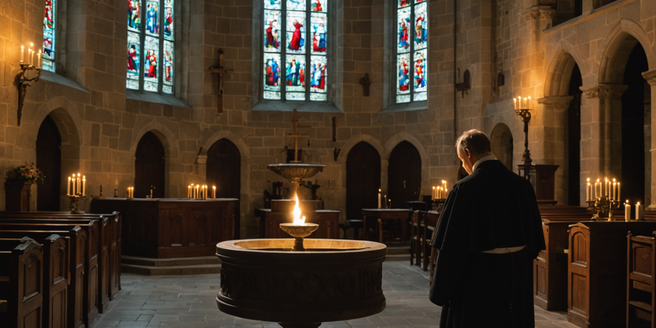
Understanding the Role of the Holy Spirit in Christian Baptism
The Holy Spirit plays a central role in Christian baptism, serving as the transformative power that moves beyond mere ritual. When believers are baptized in water, the Holy Spirit works to seal and confirm their commitment to Christ. This spiritual dimension transforms baptism from a symbolic act into a profound encounter with God’s presence. The Spirit empowers believers to live out their faith authentically and enables them to understand the deeper meaning of their baptismal covenant. Throughout Scripture and Christian tradition, baptism is presented as an encounter with the Holy Spirit that initiates spiritual rebirth and establishes believers within God’s redemptive community. This connection underscores that baptism is not primarily about external compliance but about internal transformation through divine grace and spiritual empowerment.
Biblical Foundations: How Scripture Connects the Holy Spirit to Baptism
Scripture explicitly links the Holy Spirit to baptism across both Old and New Testaments. John’s baptism of Jesus demonstrates this connection when the Holy Spirit descends upon Him like a dove. The Apostle Peter declares in Acts 2:38 that believers receive the Holy Spirit when baptized in Jesus’ name. Paul writes in Romans 6 about dying and rising with Christ through baptism, identifying this as union with the Spirit. First Corinthians 12:13 teaches that believers are baptized into one body by the Spirit. These passages establish baptism as the gateway through which the Holy Spirit enters and sanctifies believers. The biblical witness consistently portrays baptism not as empty symbolism but as God’s ordained means of conveying His Spirit to those who believe and commit themselves to Christ.
The Symbolism of Water and Spirit in Baptismal Practice
Water serves as a powerful symbol in baptismal practice, representing purification, death to the old self, and resurrection to new life. The Spirit works through this symbolism to accomplish spiritual transformation. In baptismal immersion, believers are immersed in water, symbolizing their burial with Christ, while emergence represents resurrection through the Holy Spirit’s power. This dual symbolism of water and Spirit creates a complete picture of redemption. The water cleanses outwardly while the Spirit purifies inwardly, addressing both physical and spiritual dimensions of conversion. Early church fathers emphasized this connection, teaching that water becomes the vehicle through which the Spirit operates. The combination of water baptism and Spirit baptism reflects God’s holistic approach to salvation, engaging the whole person in transformation that is both visible and invisible, external and internal.
Denominational Perspectives on the Holy Spirit’s Baptismal Role
Christian denominations hold varying perspectives on the Holy Spirit’s precise role in baptism while maintaining core convictions. Catholic and Orthodox traditions teach that the Holy Spirit works through baptism to regenerate and sanctify believers sacramentally. Protestant traditions emphasize the Spirit’s role in empowering faith prior to baptism, with baptism serving as a public declaration of that internal work. Pentecostal and Charismatic churches distinguish between baptism in water and baptism in the Holy Spirit, viewing them as distinct experiences. Reformed theologians stress that the Spirit seals believers through baptism into their covenant relationship with God. Despite these differences, all traditions affirm that the Holy Spirit is essential to baptism’s efficacy and meaning. These diverse perspectives reflect different understandings of how God’s Spirit operates while maintaining baptism’s centrality to Christian initiation and spiritual transformation.
The Gift of the Holy Spirit: What Happens After Baptism
Baptism opens the doorway to ongoing spiritual experience and transformation. Following baptism, believers receive the Holy Spirit as God’s indwelling presence, empowering them for daily Christian living. The Spirit provides spiritual gifts designed for building up the church and advancing God’s kingdom. Believers experience the Spirit’s guidance, comfort, and strength as they navigate their faith journey. The Spirit produces fruit in their lives including love, joy, peace, and self-control, gradually transforming their character. Post-baptismal life involves yielding to the Spirit’s leading, allowing Him to conform believers increasingly to Christ’s image. This ongoing relationship with the Holy Spirit is dynamic rather than static, deepening through prayer, Scripture study, and obedience. The initial gift of the Holy Spirit at baptism marks the beginning of a lifelong partnership with God’s Spirit that continues shaping and developing believers spiritually throughout their lives.
Living in the Spirit: Practical Applications for the Baptized Believer
Baptized believers are called to live practically in the power and presence of the Holy Spirit. This means regularly seeking the Spirit’s guidance through prayer and Scripture reading, allowing His wisdom to direct daily decisions and relationships. Believers should cultivate sensitivity to the Spirit’s prompting, responding obediently to His leading in witnessing, service, and personal growth. Living in the Spirit involves resisting sinful impulses and pursuing righteousness, relying on the Spirit’s strength rather than willpower alone. Community worship and fellowship provide contexts where the Spirit’s presence is experienced corporately and individually strengthened. Baptized believers are encouraged to exercise spiritual gifts the Spirit provides, contributing meaningfully to their church’s mission. Practical spiritual disciplines like fasting, meditation, and confession deepen awareness of the Spirit’s work. Ultimately, living in the Spirit after baptism means maintaining an intimate, responsive relationship with God’s presence, allowing the Holy Spirit to continually transform and empower believers for effective Christian witness and service.