Ancient Manuscripts and Early Translations
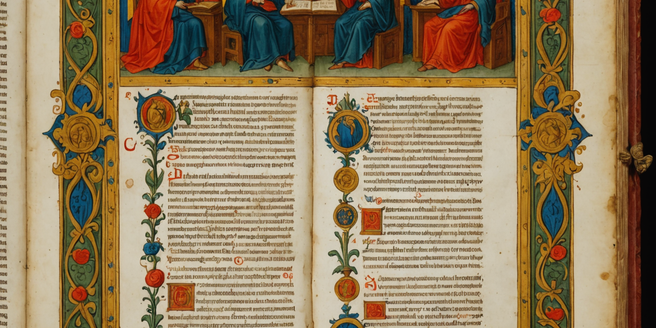
The earliest biblical texts were written in Hebrew, Aramaic, and Greek across centuries. As Christianity spread throughout the Mediterranean world, believers needed scriptures in languages they understood. The Septuagint, a Greek translation created in Alexandria around the 3rd century BCE, served Greek-speaking Jews who no longer comprehended Hebrew. Early Christian communities similarly developed Old Latin translations and Syriac versions like the Diatessaron and Peshitta. These ancient translations emerged from practical necessity rather than scholarly ambition. Scribes carefully copied manuscripts by hand, introducing both intentional refinements and unintentional variations. Archaeological discoveries, particularly the Dead Sea Scrolls, have provided invaluable insights into textual transmission. These early translation efforts established foundational principles for biblical scholarship that continue influencing modern translation work today.
The Latin Vulgate: The Church’s Standard for Centuries
Jerome’s Latin Vulgate, completed in 405 CE, became the Catholic Church’s authoritative scripture for over a thousand years. Commissioned to standardize the chaotic collection of Old Latin translations, Jerome worked from the best available manuscripts. His translation balanced literal accuracy with elegant Latin prose, making scripture accessible to Western European populations. The Vulgate’s dominance shaped medieval theology, liturgy, and biblical interpretation profoundly. Monks meticulously copied Vulgate manuscripts throughout monastic scriptoriums, though variations inevitably accumulated across regions. The Council of Trent in 1546 officially declared the Vulgate authoritative for Catholic doctrine. Its influence extended beyond religious contexts into literature and language development. However, the Vulgate’s supremacy eventually faced challenges as scholars gained access to earlier Greek and Hebrew manuscripts during the Renaissance.
The Reformation Era: Making Scripture Accessible to Common People
Martin Luther’s 1534 German translation revolutionized biblical accessibility by prioritizing common language over ecclesiastical Latin. Luther insisted on dynamic equivalence, capturing meaning rather than word-for-word renderings, enabling ordinary Germans to understand scripture independently. William Tyndale’s English translation, begun in 1525, pursued similar democratic goals despite fierce opposition from religious authorities. Tyndale’s phrase choices profoundly influenced subsequent English versions and remain embedded in modern language. The King James Version, published in 1611, synthesized earlier Protestant translations while maintaining majestic language that resonated across centuries. These Reformation translations democratized biblical knowledge, threatening established church hierarchies dependent upon priestly interpretation mediation. Printing press technology enabled mass distribution previously impossible with hand-copied manuscripts. This era fundamentally transformed Christianity by allowing laity direct scripture access.
Modern Translations: Balancing Accuracy with Readability
Nineteenth and twentieth-century translations increasingly employed scientific methodology and linguistic scholarship. The Revised Version and American Standard Version attempted maximizing fidelity to original languages while maintaining comprehensibility. The King James Version’s archaic language prompted numerous modern alternatives including the Revised Standard Version and New American Standard Bible. Translators faced persistent tension between literal word-for-word approaches and meaning-for-meaning philosophies. Archaeological discoveries and ancient manuscript fragments continuously refined scholarly understanding of original texts. The New International Version and English Standard Version attempted mediating between these competing priorities. Modern translations incorporated insights from linguistics, anthropology, and cultural studies. Translation committees collaborated internationally, combining expertise from multiple biblical languages and theological traditions. Contemporary versions acknowledge that perfect translation is impossible, requiring deliberate interpretive choices reflecting translator philosophy and intended audience.
Contemporary Versions: Digital Age and Diverse Interpretations
Digital technology has revolutionized scripture accessibility and translation proliferation in the twenty-first century. Hundreds of English Bible versions now exist, each emphasizing different priorities: theological precision, contemporary language, gender-inclusive vocabulary, or cultural specificity. Online platforms enable simultaneous access to multiple translations, facilitating comparative study. Digital tools allow translators unprecedented access to ancient manuscripts and linguistic databases. Bible apps deliver scripture instantly across smartphones and tablets globally. However, abundance creates confusion; readers struggle selecting among competing versions. Some contemporary translations prioritize gender-inclusive language reflecting modern sensibilities, while traditional versions maintain historical masculine forms. Digital democratization has enabled minority language translations previously economically unfeasible. Independent translators and small communities now produce versions reflecting specific theological perspectives or cultural contexts. This diversity reflects Christianity’s global expansion while raising questions about scriptural authority and interpretive legitimacy.